ASIC Lodgement Checklist: Director, Address, Share and Company Detail Changes
A practical ASIC lodgement checklist for Australian governance teams managing director, address, share, company detail and register changes.
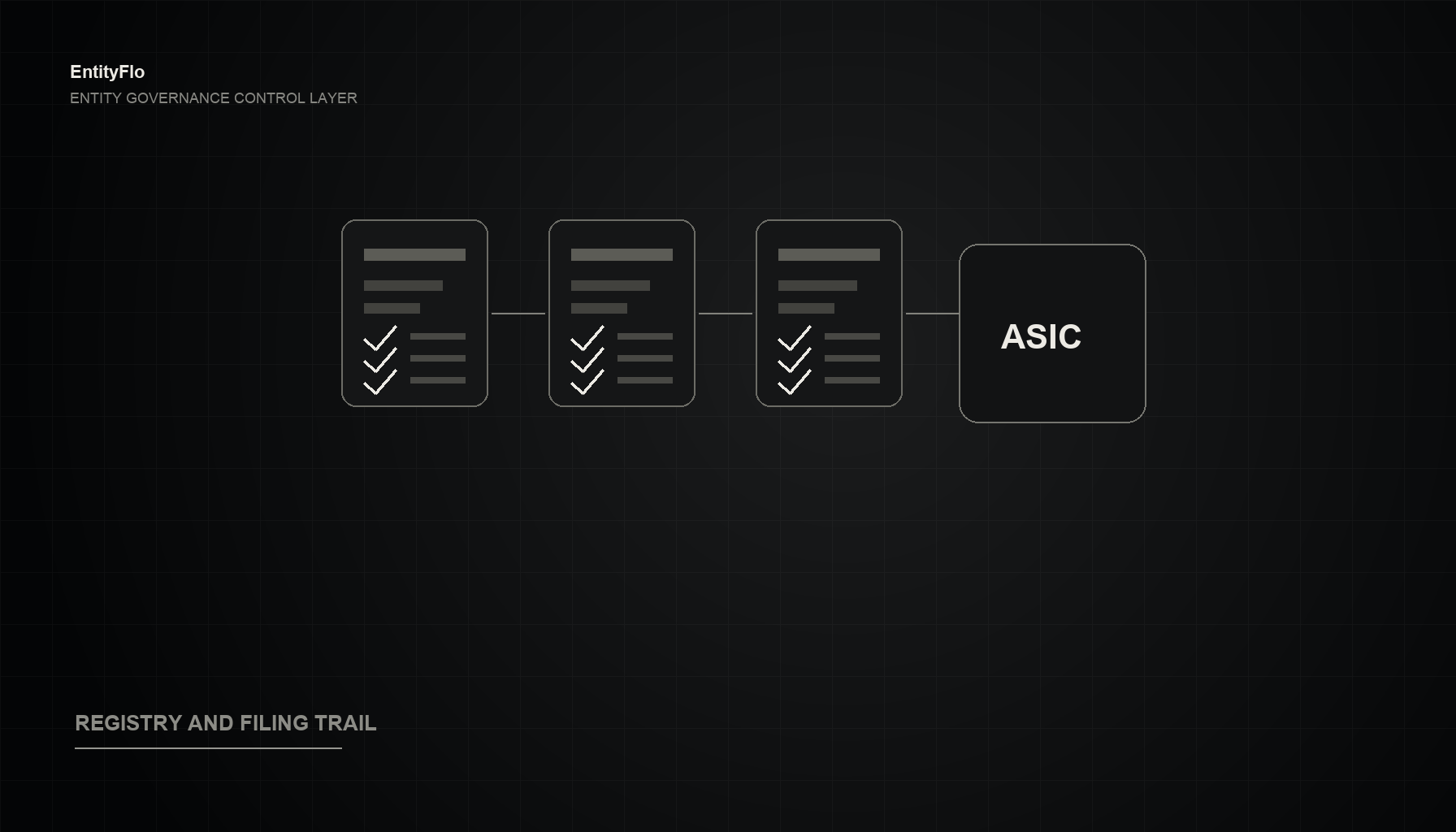
An ASIC lodgement checklist helps Australian governance teams manage company changes from trigger event to lodgement, register update and evidence storage. The lodgement is only one part of the workflow. The company also needs the right approval, source documents, internal records and audit trail.
General information only, not legal advice.
The Basic ASIC Lodgement Workflow
Most company changes should follow the same operating pattern:
- Identify the change event.
- Confirm which entity is affected.
- Check what approval or consent is required.
- Prepare or collect the source documents.
- Confirm whether an ASIC lodgement is required.
- Lodge the change within the required timeframe.
- Save lodgement confirmation.
- Update internal registers.
- Update ownership or structure records if needed.
- Close the task with evidence attached.
Teams get into trouble when they treat step 6 as the whole job.
Changes That Commonly Require Control
ASIC provides guidance on changes companies may need to make to their company details. Governance teams should build controlled workflows for common events, including:
- director appointment
- director resignation
- company secretary appointment
- company secretary resignation
- registered office change
- principal place of business change
- member or shareholder change
- share issue
- share transfer
- share cancellation
- company name change
- ultimate holding company change
- corrections to company details
The exact lodgement requirement depends on the event and entity. The checklist should make the team confirm the requirement, not assume it.
Pre-Lodgement Checklist
Before lodging, confirm:
- entity name and ACN
- current ASIC details
- internal entity record
- type of change
- effective date
- required approval
- signed consent or resignation where relevant
- board, director or member resolution where relevant
- person responsible for lodgement
- lodgement deadline
- adviser involvement if applicable
- register impact
- ownership chart impact
- documents that need to be stored after lodgement
This prevents a common failure: lodging the right form but leaving the internal record wrong.
Director And Secretary Changes
Officer changes need careful evidence. A director or secretary appointment, resignation or correction may affect ASIC records, registers, consents, board records, signing authority and group reporting.
The team should check:
- appointment or resignation date
- signed consent to act or resignation evidence
- approving decision
- ASIC lodgement requirement
- officeholder register update
- board or committee records
- signatory or banking changes if relevant
- group structure and reporting impact
If the person was an officeholder across several entities, create one workflow per entity. Do not rely on a single email thread.
Address And Company Detail Changes
Address changes can appear simple, but they often expose stale records.
Check:
- registered office
- principal place of business
- service addresses where relevant
- contact email or electronic address where relevant
- adviser or registered agent records
- lease, occupancy or consent evidence where needed
- entities using the same address
- documents or templates that include the old address
For corporate groups, one address change may affect dozens of entities. Treat it as a portfolio workflow.
Share And Member Changes
Share and member changes should never stop at lodgement.
Check:
- approving resolution or authority
- share issue, transfer or cancellation documents
- member details
- consideration or transaction evidence where relevant
- share register update
- member register update
- beneficial ownership or UBO impact
- ownership chart update
- ASIC lodgement requirement
- evidence pack stored with the entity record
The register and ownership map should be updated as part of the same workflow.
Post-Lodgement Checklist
After lodgement, confirm:
- lodgement accepted or confirmation received
- ASIC record updated
- internal entity record updated
- registers updated
- ownership chart updated if relevant
- approval documents stored
- consent or resignation evidence stored
- adviser confirmation stored
- task owner marked complete
- next review date set
This is where many manual processes fail. The lodgement is complete, but the company record remains stale.
How EntityFlo Helps
EntityFlo helps Australian governance teams manage ASIC lodgement workflows as part of the broader entity record. Teams can connect the trigger event, approval, lodgement, register update, ownership impact and evidence in one place.
That gives CFOs, General Counsel and Company Secretaries a clearer answer to:
- what changed
- who approved it
- what was lodged
- whether the register was updated
- where the evidence sits
- what remains open
For groups managing many entities, that is the control layer missing from spreadsheet and inbox workflows.
FAQ
What is an ASIC lodgement checklist?
An ASIC lodgement checklist is a workflow for managing company changes that may need to be notified to ASIC, including the related approval, document, register and evidence steps.
What company changes may need ASIC lodgement?
Common examples include changes to directors, secretaries, company addresses, members, share structure, company name and other company details. The exact requirement depends on the event and company.
Is ASIC lodgement enough to complete a company change?
No. The team should also update internal records, registers, ownership charts and evidence files where relevant.
Who should own ASIC lodgement workflows?
Ownership may sit with the Company Secretary, General Counsel, finance team, external registered agent or adviser. The key is that every entity and every open action has a clear accountable owner.
Can software help manage ASIC lodgements?
Yes. ASIC compliance software can help track the change event, approval, lodgement status, register update, evidence and responsible owner in one workflow.
Publish Notes
- Suggested slug: `/blog/asic-lodgement-checklist-australia/`.
- Add Article and FAQPage schema.
- Link to ASIC compliance software, corporate register software, company secretary software, governance audit trail checklist and book a demo.
- Submit in Search Console after publishing.
We use cookies to improve your experience. Essential cookies are always active.